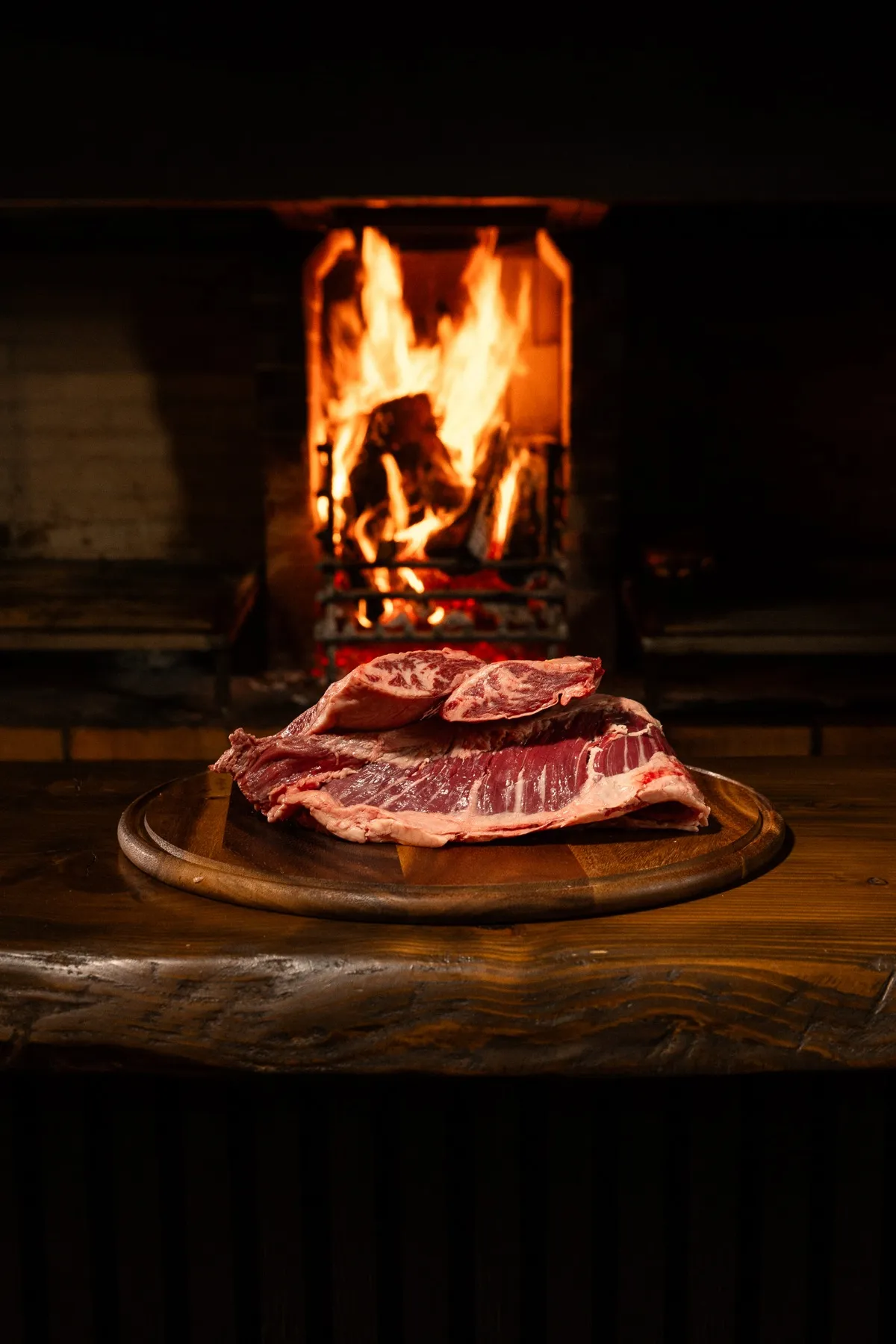
In Uruguay the asado is not explained: it is lived. It is Sunday, it is family, it is the smell of firewood announcing hours of conversation and anticipation. Behind that seemingly simple ritual — beef, fire, patience — lies a story centuries long, one that begins on the endless plains and reaches all the way to our name: El Parrillero.
The Gauchos: where it all begins
It all starts with the Gauchos, the skilled horsemen and cattle herders who, in the 18th and 19th centuries, roamed Uruguay’s immense prairies. After the Spanish introduced cattle to the Banda Oriental, the herds multiplied in the wild: the ganado cimarrón, roaming free across the plains.
The Gauchos lived off that cattle and off their horse. No kitchens, no frills: the meat was cooked however it could be, over an open fire, often still attached to the animal’s hide. This was the asado con cuero, one of the oldest and most rural techniques, in which the skin protects the meat and keeps it incredibly juicy.
From that act of necessity came a way of being in the world. The fire was a gathering place, warmth, storytelling. Beef over the embers slowly became a symbol of identity.
From the stake to the parrilla
In the countryside, the most traditional way to cook is still the asado al palo (or a la cruz): the animal opened and fixed to an iron cross planted beside the fire, cooked for hours by the heat radiating from the embers. It is the asado of celebrations, of big numbers, of the estancias.
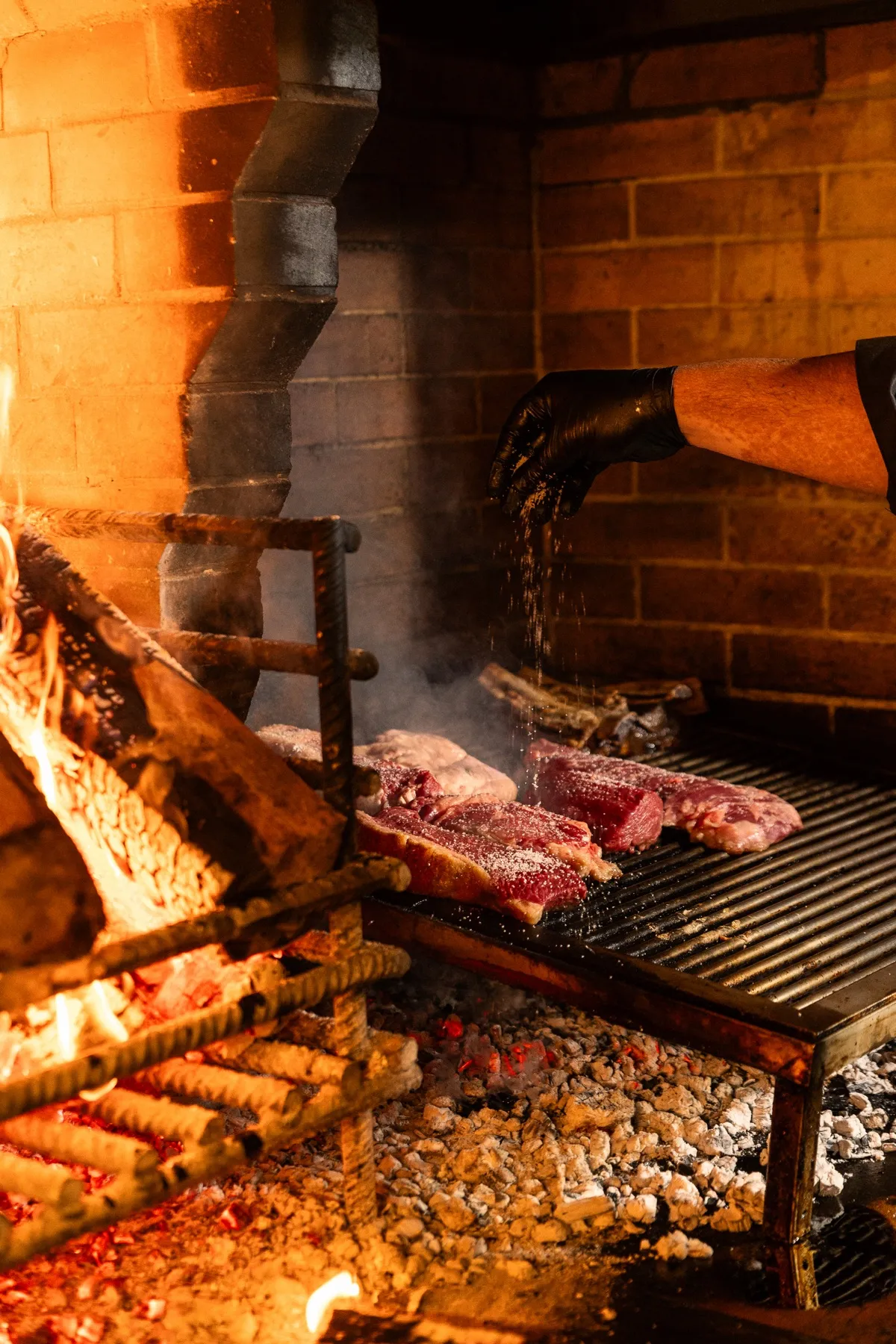
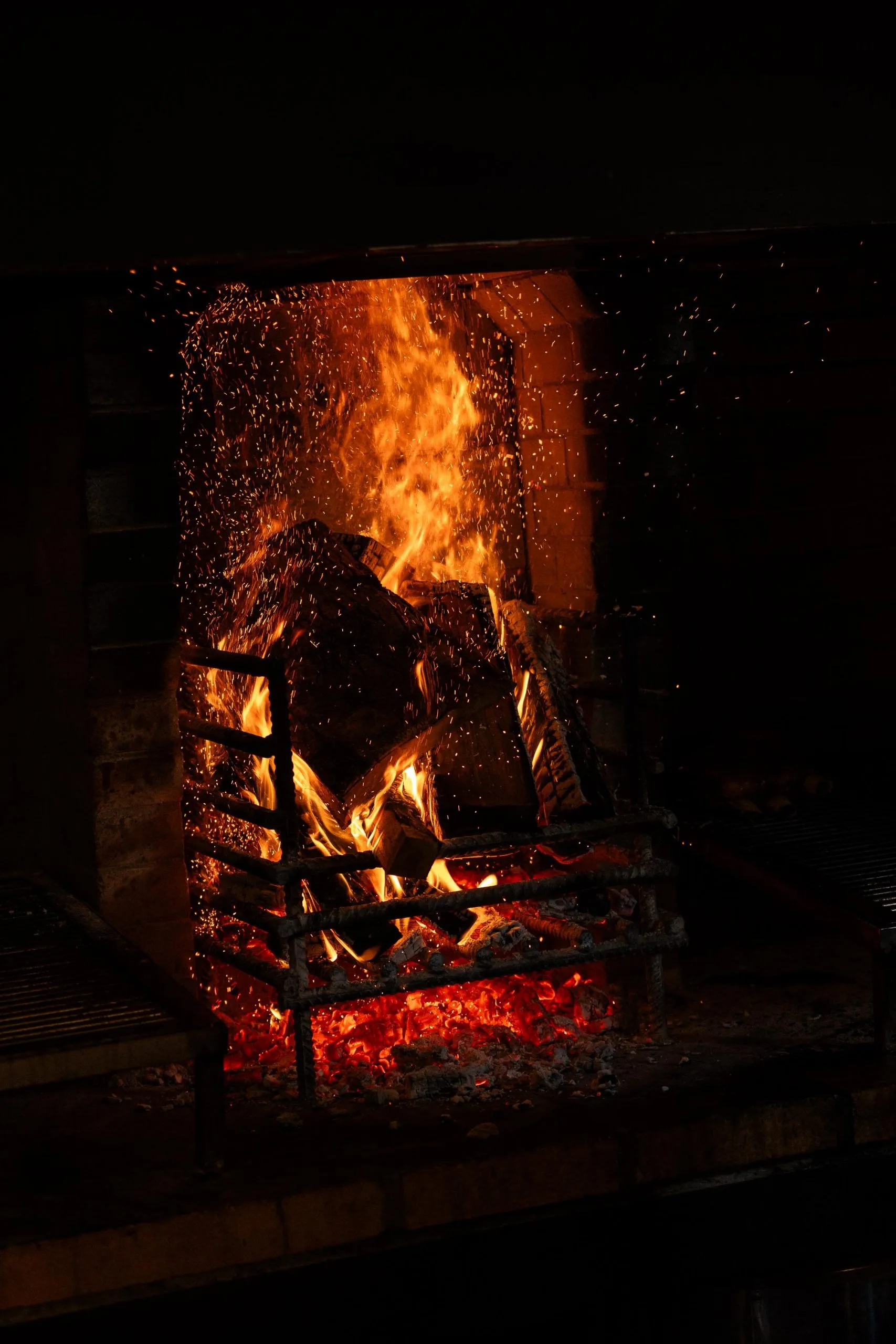
In time, and especially in the cities, came the parrilla: the grill with its side brasero, where the firewood turns to embers and the heat is controlled with precision. More practical, more urban, but faithful to the same principle: never the flame, always the embers. It is the school we carry on every evening.
A nation that lives on beef
Few peoples in the world have the relationship with beef that Uruguayans do. Uruguay has always been among the top countries in the world for beef consumption per capita, and the secret lies in its land: boundless prairies, a temperate climate, cattle raised on pasture for almost their entire lives.
This translates into beef with a clean, authentic flavour, recognised internationally. It is no accident that chefs around the world seek out Uruguayan beef. When we choose our cuts — from Uruguayan Black Angus to Wagyu — we start precisely from this heritage. To find your way among the names, read our guide to the cuts of the parrilla.
The parrillero: far more than a cook
In this culture, the person who tends the fire has a special role. The parrillero (or asador) is not simply the one who cooks: it is the one who knows the wood, can read the embers, decides when to turn each cut and keeps the rhythm of the whole table. It is a role of trust, almost ceremonial.
Our restaurant carries that name with pride. El Parrillero is the one who stands before the fire — and that is exactly what we do: cook your beef over wood, before your eyes, with the time and care the tradition demands.
A shared heritage, a precise identity
The asado does not belong to a single country: it is a rioplatense heritage, shared with Argentina and the south of Brazil. But each land has given it its own accent. The Uruguayan one is made of wood, of patience and of a beef quality that speaks for itself — a theme we explore in the comparison between the Uruguayan parrilla and the Argentine asado.
At El Parrillero, in Busto Arsizio and fifteen minutes from Malpensa, this is exactly what we set out to bring: not just a dinner, but a piece of Uruguay. The fire, the beef, and that slow, convivial way of being at the table.
Would you like to experience it? Discover our story, take a look at the menu or book a table. The fire is already lit.