Ask a Uruguayan and an Argentine which is the real asado, and settle in for a long conversation. They are cousins who grew up in the same backyard — the banks of the Río de la Plata — with the same love of beef over fire. But anyone who truly knows the embers will tell you the differences are real, and they are not minor details.
At El Parrillero we call ourselves a Uruguayan steakhouse, and that is not a marketing nuance: it is how we light the fire, choose the cuts and bring the beef to the table. Let us explain, with all due respect to our Argentine cousins, where the shared tradition ends and the Uruguayan identity begins.
A common root: the rioplatense culture
Before the differences, the most important truth: asado is a shared heritage. It was born with the Gauchos, the skilled horsemen who, in the 18th and 19th centuries, roamed the immense plains of Uruguay and Argentina living off cattle and fire. Cooking meat over wood was an act of survival before it was a pleasure, and from there it became a social ritual, an identity, a way of being together.
That root is the same on both banks of the river. The chimichurri and the salsa criolla, the Sunday spent around the grill, coarse salt as the only seasoning: it is a common language. If you want the full picture, we have devoted a whole story to the history of the Uruguayan asado.
Difference number one: the fire
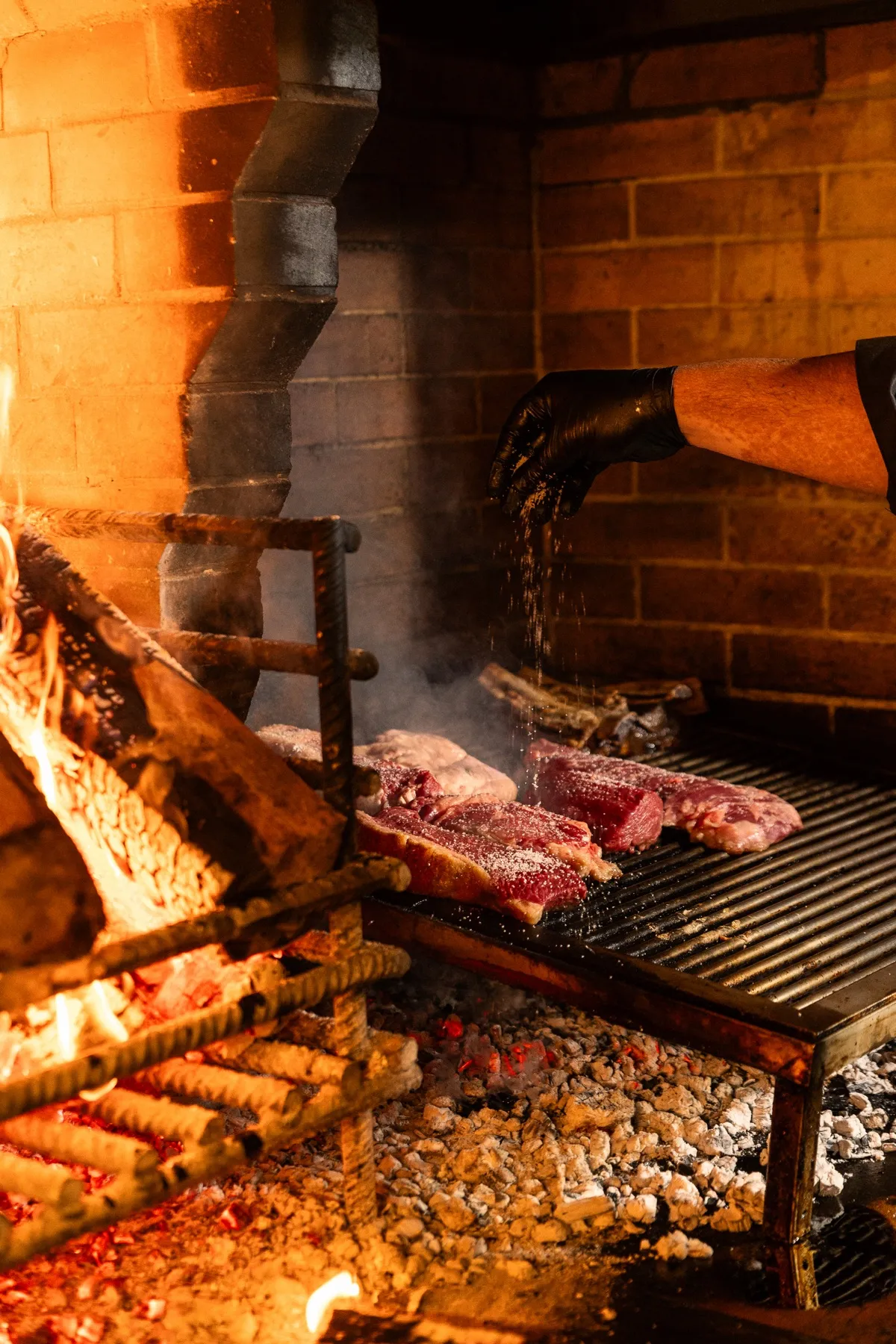
If there is one point where Uruguay claims its own school, it is the fuel. The Uruguayan tradition is the asado a leña — real firewood, burned down separately until it becomes embers, then raked under the grill with a shovel.
Argentines often use charcoal too, faster and more practical, especially in the cities. It works beautifully — but anyone raised in Uruguay will tell you that wood gives an aroma charcoal cannot: that smoky, sweet note that seeps slowly into the meat. It is no accident that Uruguay is among the countries that burn the most asado firewood in the world.
For us, the fire is wood — always. It is the first thing we light and the last thing to go out.
The parrilla and the brasero
The tool itself tells the story of a school. The classic Uruguayan parrilla has a side brasero: a small hearth where the firewood turns to embers, which the parrillero measures out and slides under the grill depending on how much heat each cut needs. The grill itself, with its V-shaped bars, channels the fat away from the direct flame.
It is a system that puts control in the hands of the cook: no flare-ups, no rush. The beef cooks with the heat of the embers, not with the flame. It is patience turned into technique — the same patience we bring every evening in front of our guests.
The cuts: brothers, with a few cousins
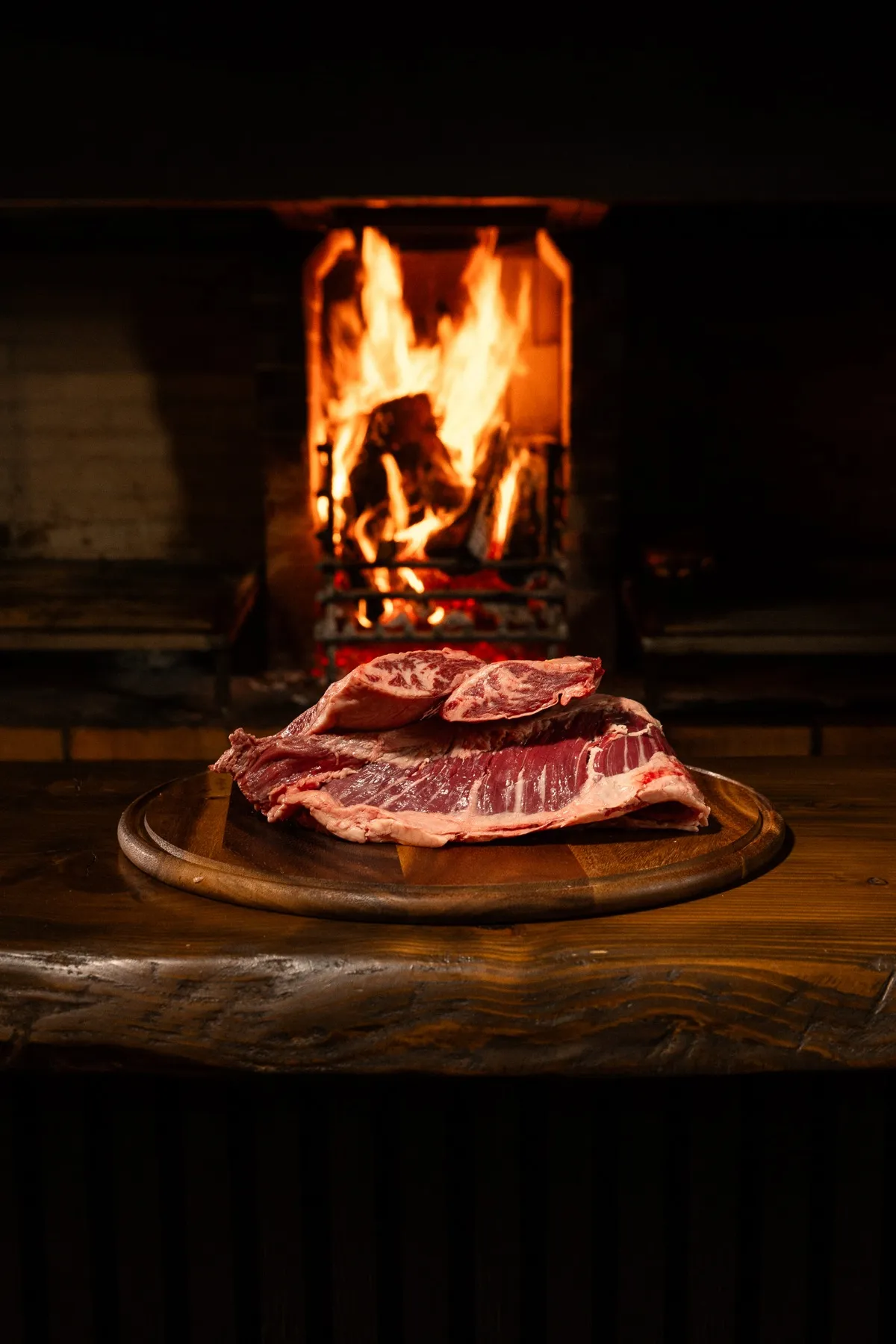
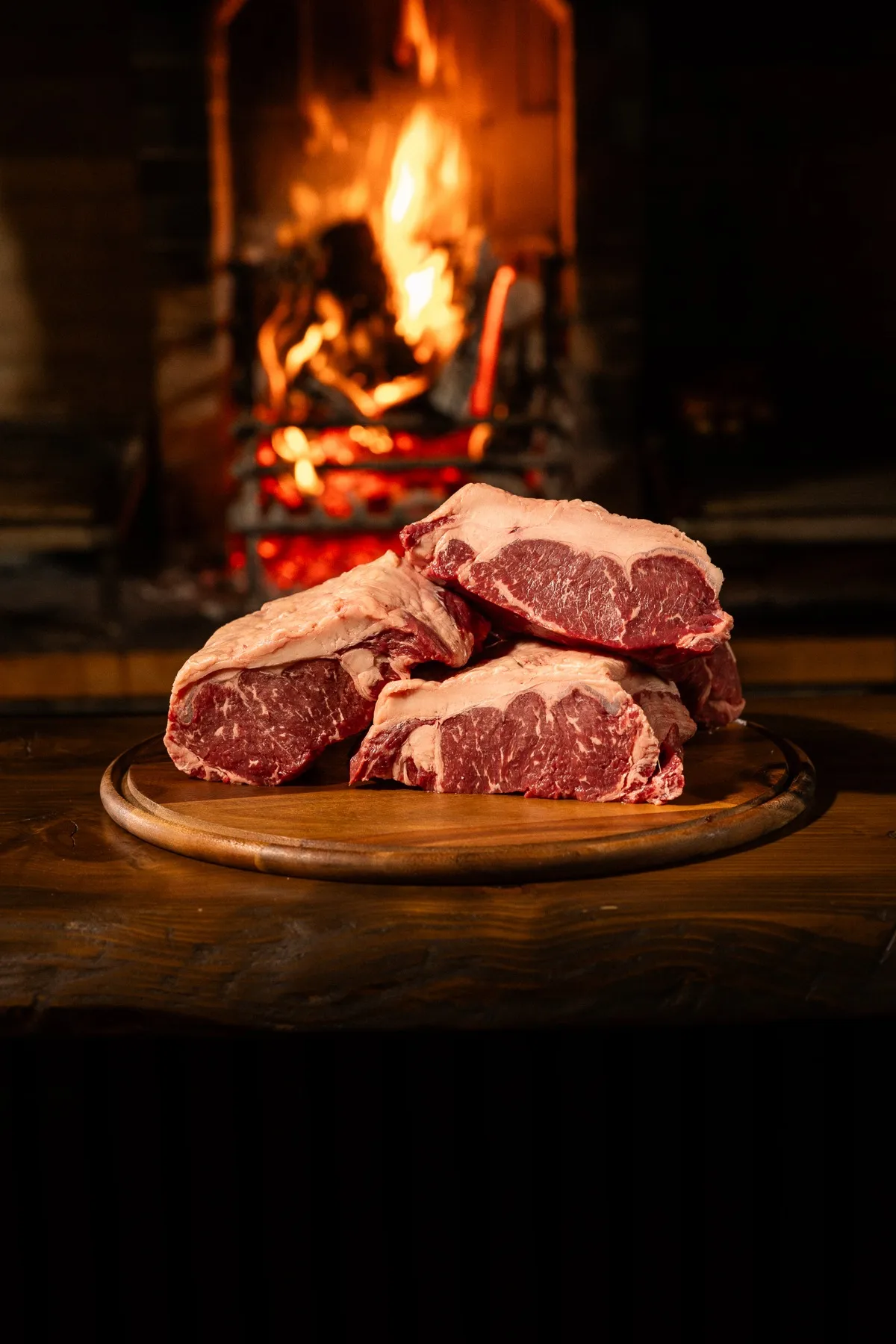
When it comes to cuts, Uruguay and Argentina speak almost the same language. Asado de tira (short ribs cut across the bone), vacío (the fibrous, flavourful flank), entraña (the thin, intense skirt steak, one of our most requested), colita de cuadril and bife de chorizo: you will find them on both banks.
A few accents differ. Uruguay has its pamplona, a roll of chicken or pork stuffed with peppers and cheese, cooked slowly over the embers, almost unknown in Argentina. And there is the chivito, Uruguay’s flagship sandwich, living proof of how central beef is to our cooking. To find your way among the names, we have written a guide to the cuts of the parrilla.
What never changes is the quality of the raw material. Uruguayan beef is famous around the world because it is pasture-raised, on endless prairies: animals that eat grass, in the open air, as nature intended. At El Parrillero we work with Premium Uruguayan Black Angus, Creekstone USA Prime and, for those seeking the absolute peak, Japanese A5 Wagyu.
So, who wins?
No one — and that is exactly the point. The rivalry between the Uruguayan parrilla and the Argentine asado is the affectionate kind, between families who love each other and tease each other. Two dialects of the same fire.
What we can offer you is the Uruguayan version, done properly: wood, embers, patience and the finest beef, in the heart of Busto Arsizio. If you are curious to taste the difference, there is only one real way: sit down at the table.
Take a look at our menu, discover what it means to be a steakhouse in Busto Arsizio or book a table and let the fire do the talking.